Did you know National Manufacturing Day is October 5? It was started in 2012 by Founding Partner Fabricators and Manufacturers Association. It was designed to guide the public’s image of manufacturing, address labor shortages, and discuss common misconceptions about manufacturing. But what is the history of manufacturing in the U.S.?
By the late 18th century, textile manufacturing came to America from England. The creation of the cotton gin helped the industry grow as well. The iron industry soon experienced a boom, and by the 19th century, the U.S. had switched from an agricultural economy to an industrial economy. Infrastructures such as canals and railroads were built, creating thousands of jobs for Europeans who had emigrated to the U.S. The different forms of travel allowed cargo to travel across the country like never before.
By the 20th century, manufacturing was at an all-time high. By WWII, one-third of civilian jobs were in manufacturing. But as the industry became more efficient, less workers were need. Post WWII, manufacturing declined, and today, only 8% of jobs are in a factory. Today, China is the leading manufacturer, although the U.S. isn’t far behind. Products from manufacturing industries account for over one-third of U.S. gross domestic product. Because manufacturers are leaders in innovation and efficiency, U.S. factories now output twice as much as they did in the 1980s, but with one-third fewer workers. The apparel industry, in particular, has significantly declined and been outsourced to foreign countries, while the refined oil industry has increased. Crude oil that comes from other countries is refined by the U.S., and refined petroleum products are some of the biggest manufactured products in the U.S. According to marketwatch.com, the leading exported manufactured good was civilian airplanes worth $63 billion, followed by auto parts ($58 billion), pharmaceuticals ($55 billion), autos ($55 billion), and gasoline, diesel and other refined oil distillates ($46 billion), and other top exports include semiconductors, telecommunications equipment, medical equipment, plastics and airplane engines.
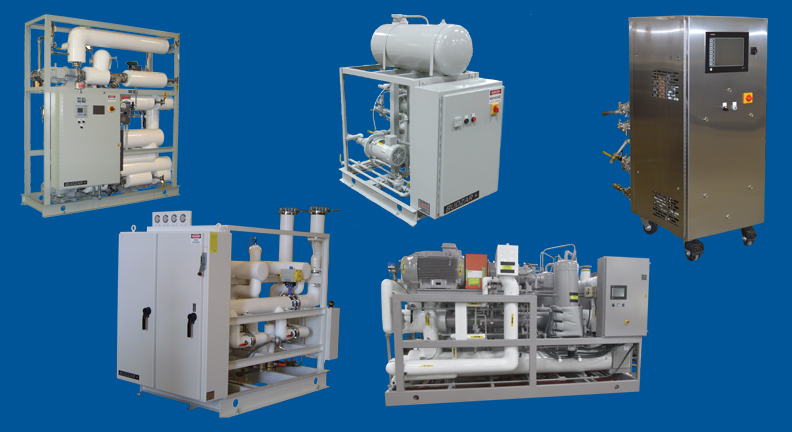
Since the 1970s, Budzar Industries has been a leading manufacturer of custom temperature control and pumping systems. To learn more about Budzar Industries, click on our link: http://budzar2019.sixthcitydev.com/about-us/ and check out the facts below about the U.S. manufacturing industry:
- In 1794, U.S.-born inventor Eli Whitney (1765-1825) patented the cotton gin, a machine that revolutionized the production of cotton by greatly speeding up the process of removing seeds from cotton fiber. By the mid-19th century, cotton had become America’s leading export. (https://www.history.com/topics/inventions/cotton-gin-and-eli-whitney)
- By the 1850s, canals were losing business to the railroads. Railroads had several advantages over the canals, which made the railroads much more popular. While railroads cost more to ship people and goods, they could deliver people and items much more quickly than the canals. Railroads also were not limited by a water source as canals were. Because of these advantages, railroads quickly supplanted the canals. (http://www.ohiohistorycentral.org/w/Ohio_and_Erie_Canal)
- In 1862, Congress passed the Pacific Railway Act, which authorized the construction of a transcontinental railroad. The first such railroad was completed on May 10, 1869. By 1900, four additional transcontinental railroads connected the eastern states with the Pacific Coast. (http://www.loc.gov/teachers/classroommaterials/presentationsandactivities/presentations/timeline/riseind/railroad/)
- For almost a century after the Second Industrial Revolution of the late 19th century, the iron ore mines of Minnesota were the main supplier of the American steel industry, located mainly in the Great Lakes area. (https://www.brookings.edu/blog/up-front/2018/03/05/how-imports-helped-the-american-steel-industry/)
- America’s steel mills made more than half the world’s steel in the late 1940s and about 40% of the world’s steel throughout the 1950s. In the 10 years starting in 1948, American steel mills averaged nearly 700,000 workers. Today only 83,000 people still work in the nation’s steel mills. (https://money.cnn.com/2018/03/09/news/companies/american-steel-history/index.html)
- In 2016, U.S. manufacturers made about $5.4 trillion worth of goods, according to the Bureau of Economic Analysis. The biggest categories were food, beverages and tobacco products ($817 billion), chemical products ($752 billion) and motor vehicles and parts ($670 billion). (http://www.pewresearch.org/fact-tank/2017/07/25/most-americans-unaware-that-as-u-s-manufacturing-jobs-have-disappeared-output-has-grown/)